
Every breach has a date. Here they are, in order.
From a cereal-box whistle that fooled the phone network to ransomware that emptied gas stations, this is the story of the hacks that changed how the world thinks about security.
18 cases across 50 years
Timeline of major hacks
The 1970s and 1980s
Hacking before the web: phone lines, modems and very curious teenagers.
-
1971
A cereal-box whistle takes on the phone network
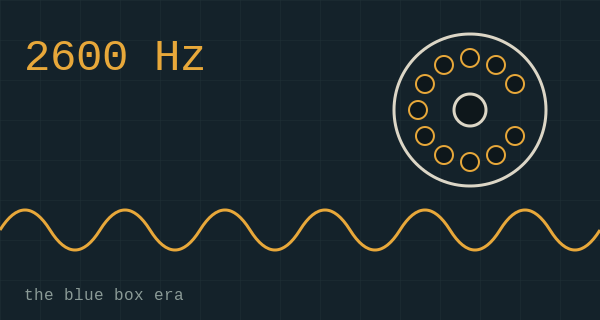
John Draper, nicknamed Captain Crunch, discovered that a toy whistle packed in Cap'n Crunch cereal boxes produced a 2600 Hz tone. That was the same signal AT&T's long-distance switches used to mark a line as idle.
Read the full case
By sending that tone down the line, phone phreaks could take control of trunk lines and place free calls anywhere. Soon they were building "blue boxes" that generated the tones electronically. Among the people who built and sold blue boxes in those early years were a young Steve Wozniak and Steve Jobs, before Apple existed. Draper was later prosecuted for toll fraud.
Why it matters: the phone network carried its control signals on the same channel as voice, so anyone who could make the right sound could give orders. Mixing commands and data in one channel is a flaw that keeps coming back in new forms.
-
1983
The 414s: teenagers inside Los Alamos
A group of teenagers from Milwaukee, named after their local area code, dialed into dozens of computers from their bedrooms, including systems at Los Alamos National Laboratory and Memorial Sloan-Kettering Cancer Center.
Read the full case
The FBI traced them in 1983, the same year the film WarGames made the idea of a kid breaking into military computers feel real. One member, Neal Patrick, testified before a House subcommittee. Most of the group faced little punishment, partly because existing laws did not clearly cover what they had done.
Why it matters: the case showed lawmakers how exposed dial-up systems were, and it fed into the push for the Computer Fraud and Abuse Act, passed in 1986.
-
1986
A 75-cent accounting error leads to the KGB
Clifford Stoll, an astronomer working as a system administrator at Lawrence Berkeley National Laboratory, noticed that the lab's computer-time billing was off by 75 cents. He decided to find out why.
Read the full case
The gap came from an unknown user. Stoll spent months watching the intruder, even creating fake, tempting files to keep him online long enough to trace the connection. It led to Markus Hess and a small group of hackers in West Germany who were selling what they found to the Soviet KGB. Stoll told the story in his 1989 book, The Cuckoo's Egg.
Why it matters: it is one of the first documented cases of state-linked cyber espionage, and it was solved by patient log reading rather than fancy tools.
-
1988
The Morris Worm slows the early internet to a crawl
On November 2, 1988, Cornell graduate student Robert Tappan Morris released a self-copying program onto the internet. It is widely estimated to have hit around 6,000 of the roughly 60,000 connected machines.
Read the full case
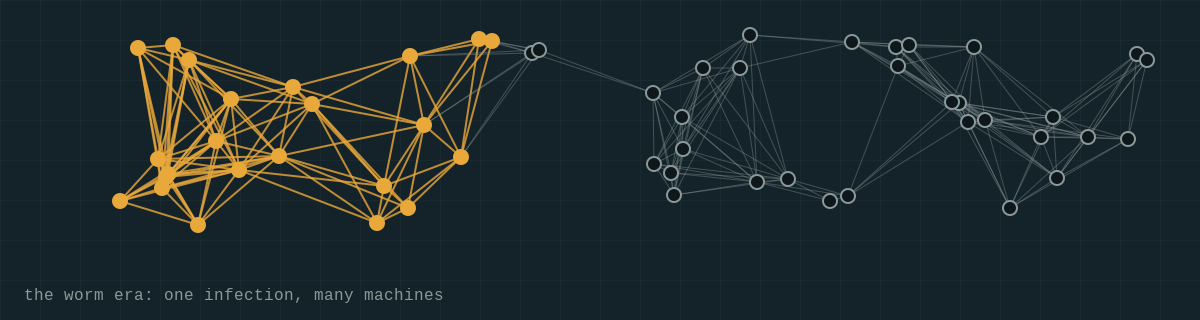
The worm spread through a debug feature in the Unix mail program sendmail, a flaw in the finger service, and weak passwords. A bug in its own logic made it re-infect machines again and again, so affected computers slowed down until they were unusable. Morris became the first person convicted under the Computer Fraud and Abuse Act and received probation, community service and a fine. He later became a professor at MIT.
Why it matters: an experiment turned into a large outage, and the response led to the creation of the first Computer Emergency Response Team at Carnegie Mellon University.
The 1990s
The internet goes public, and so do the first mass infections and big-money thefts.
-
1994
A bank robbery from St. Petersburg
Vladimir Levin, working from Russia, got into Citibank's cash management system and moved roughly $10 million to accounts around the world.
Read the full case
Citibank noticed, worked with the authorities and recovered most of the money. Levin was arrested at London's Heathrow airport in 1995, extradited to the United States and sentenced to three years in prison in 1998.
Why it matters: it was one of the first large-scale bank thefts carried out over a network, and it pushed banks to monitor electronic transfers far more closely.
-
1995
Kevin Mitnick: the most wanted hacker in America
Kevin Mitnick spent years breaking into the networks of major technology companies, often by simply phoning employees and talking them into handing over access.
Read the full case
After a long chase, he was arrested on February 15, 1995 in Raleigh, North Carolina, with help from security researcher Tsutomu Shimomura, whose own machines Mitnick had broken into. He spent about five years in custody, part of it in solitary confinement. After his release he became a security consultant and author. He died in 2023.
Why it matters: Mitnick made the point that people are often easier to compromise than systems, a lesson that phishing still proves every day.
-
1999
Melissa: the virus that mailed itself to your friends
In March 1999, a Microsoft Word document spread by email and sent itself to the first 50 contacts in each victim's address book. Mail servers around the world choked on the traffic.
Read the full case
The message came from someone you knew, so people opened it. David L. Smith of New Jersey was arrested within about a week and was sentenced to 20 months in prison. The FBI estimated the damage at around $80 million.
Why it matters: malware had found its best delivery method: your own trust in the people you know.
The 2000s
Email worms, nation-scale disruption and organized card theft.
-
2000
ILOVEYOU: a love letter with a payload
In May 2000, millions of people received an email titled ILOVEYOU with an attachment that looked like a harmless text file. Opening it overwrote files and mailed the worm to every contact.
Read the full case
It crossed the globe within hours and reached companies and government offices in many countries. Investigators traced it to the Philippines and a student named Onel de Guzman. Charges were dropped because the country had no law that covered writing malware at the time, and one was passed soon after.
Why it matters: the real file ended in .vbs, but Windows hid file extensions by default. Small interface choices can decide whether an attack works.
-
2007
Estonia goes offline
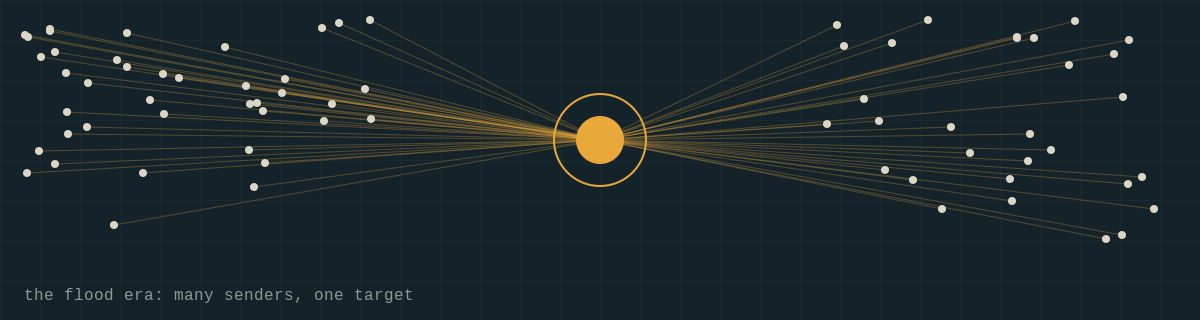
After a dispute over moving a Soviet-era war memorial in Tallinn, waves of traffic floods hit the websites of Estonia's parliament, ministries, banks and newspapers for about three weeks.
Read the full case
Estonia was one of the most digitally connected countries in the world, so the impact was real: online banking and government services struggled. Russia denied involvement, and attribution stayed contested. In 2008, NATO opened its Cooperative Cyber Defence Centre of Excellence in the Estonian capital.
Why it matters: it is widely seen as the first cyberattack to be treated as a threat to a whole nation.
-
2008
Albert Gonzalez and the card-theft ring
Albert Gonzalez, a former informant for the US Secret Service, led a ring that stole card data from major retailers and payment processors, including TJX and Heartland Payment Systems.
Read the full case
The group used ordinary web flaws such as SQL injection and then sniffed data as it moved through company networks. The Heartland breach alone is reported to have exposed around 130 million cards. Gonzalez was sentenced to 20 years in prison in 2010.
Why it matters: the biggest card heists in history started with basic, fixable website bugs.
The 2010s
Cyberweapons, hacktivists and breaches measured in tens of millions.
-
2010
Stuxnet: malware that broke machines
Discovered in 2010, Stuxnet spread through Windows computers and USB sticks, looking for one specific target: Siemens control systems running uranium centrifuges at Iran's Natanz facility.
Read the full case
It used several previously unknown Windows flaws. Once it found its target, it made the centrifuges spin at damaging speeds while feeding operators normal-looking readings. It is widely attributed to the United States and Israel, though neither government has formally confirmed it.
Why it matters: it is the first well-documented piece of malware built to cause physical destruction.
-
2011
LulzSec: 50 days of chaos for fun
In mid-2011, a small group calling itself LulzSec hit Sony, PBS and other targets, posting stolen data and taunting victims, mostly for entertainment.
Read the full case
After about 50 days, they announced they were done. The group had already unraveled: its leader Hector Monsegur, known as Sabu, was arrested in June 2011 and began working with the FBI, and further members were arrested in the UK, Ireland and the US.
Why it matters: it showed how a handful of people could embarrass large organizations using unpatched sites and reused passwords, and how fast anonymity can fall apart.
-
2013
Target: breached through the air conditioning
Attackers stole the login details of a heating and cooling contractor, used them to get into Target's network, and collected data from payment terminals during the holiday shopping season.
Read the full case
About 40 million payment cards were exposed, along with personal details of tens of millions more customers. Security tools reportedly raised alerts that went unacted on. Target's CEO resigned in 2014.
Why it matters: your security is only as strong as your least careful supplier.
-
2014
Sony Pictures: hack, wipe and leak
In November 2014, a group calling itself Guardians of Peace wiped Sony Pictures' computers and leaked unreleased films, salary data and private executive emails.
Read the full case
The attack came as the studio prepared to release The Interview, a comedy about North Korea's leader. The US government publicly blamed North Korea, which denied it. The studio first pulled the film from theaters, then released it online and in a limited run.
Why it matters: leaked emails became a weapon, and a company's private conversations became public news.
-
2016
Mirai: an army of hacked cameras
On October 21, 2016, a botnet built from hacked home cameras, video recorders and routers flooded the DNS provider Dyn, and many people could not reach Twitter, Netflix, Reddit and other major sites.
Read the full case
Mirai simply tried the factory-default passwords that nobody had changed. Its source code was leaked online shortly before the attack, which let others copy it. The creators, young Americans, later pleaded guilty in US court.
Why it matters: cheap connected devices with default passwords can be turned into a weapon big enough to disrupt a large part of the internet.
-
2017
WannaCry: ransomware stops hospitals
On May 12, 2017, ransomware spread across more than 150 countries and infected over 200,000 computers, locking files and demanding Bitcoin.
Read the full case
It used EternalBlue, a Windows exploit leaked by a group called the Shadow Brokers and believed to have been developed by the US National Security Agency. Hospitals in the UK's NHS were hit hard and had to cancel appointments. Researcher Marcus Hutchins slowed the spread by registering a domain that acted as a kill switch. The US and UK later blamed North Korea.
Why it matters: Microsoft had released a patch two months earlier. Many victims simply had not installed it.
The 2020s
Supply chains and ransomware reach critical infrastructure.
-
2020
SolarWinds: poisoned software updates
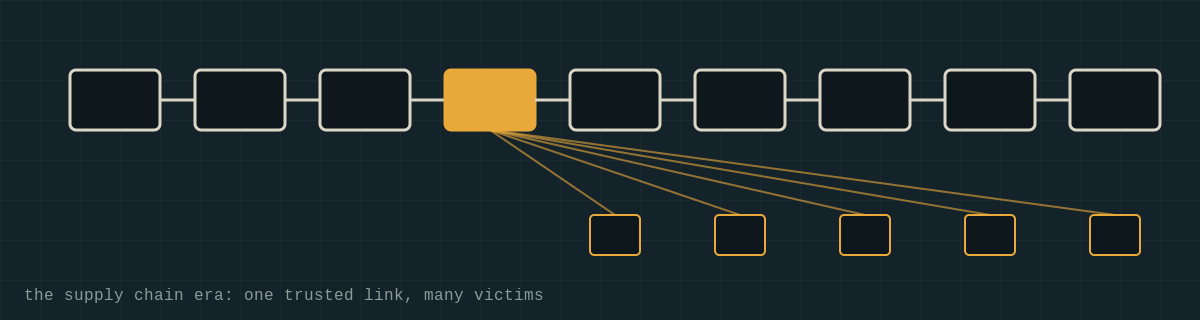
Attackers broke into the build system of SolarWinds, which makes the Orion network-management software, and slipped a backdoor into official updates that customers installed.
Read the full case
Around 18,000 customers received the tainted update, and the attackers picked a smaller set of high-value targets, including US government agencies. The security firm FireEye uncovered it in December 2020 while investigating a breach of its own. The US government attributed the operation to Russia's foreign intelligence service, the SVR.
Why it matters: installing a signed update from a trusted vendor is exactly what security teams tell people to do, and this attack turned that advice against them.
-
2021
Colonial Pipeline: a fuel shortage from one password
In May 2021, the DarkSide ransomware group hit Colonial Pipeline's computer systems, and the company shut down the pipeline that supplies a large share of fuel to the US East Coast.
Read the full case
Reports say the attackers got in through an old VPN account that had a compromised password and no multi-factor authentication. Panic buying and fuel shortages followed in parts of the Southeast. Colonial paid about $4.4 million in Bitcoin, and the US Justice Department later recovered part of it.
Why it matters: a breach of office computers caused real shortages, showing how digital attacks reach the physical world.
About this archive
darkzamaon collects the stories behind the biggest hacks in history, told for people who are curious about how security fails and why. It is written for education and awareness.
Dates, damage figures and attributions come from widely reported public accounts. Estimates vary between sources, and some attributions remain disputed. Treat the numbers as approximate.